Language English
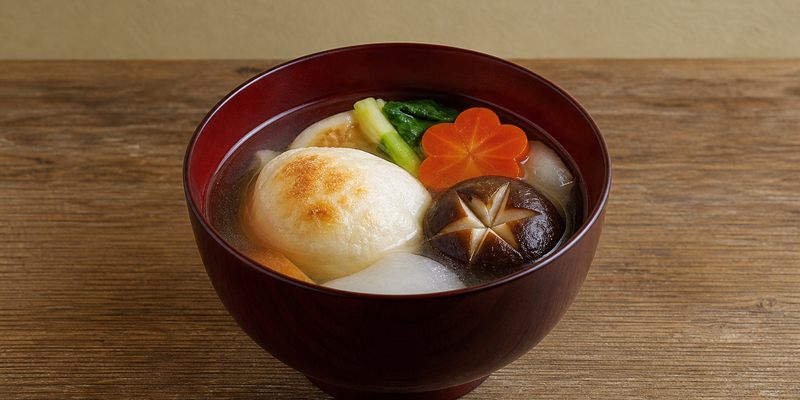
Mochi & Ozoni Audio Guide
Steamed glutinous rice pounded in a mortar until it turns into a stretchy, chewy mass: mochi, a food close to the Japanese heart. From an offering to the gods it grew into New Year's ozoni soup, the stacked kagami-mochi, and joyful pounding festivals. Six parts cover its history, its many types, the east-west split of ozoni, New Year customs, how to eat it safely, and how to enjoy it.
- 122 audio guides across Japan — Tokyo, Kyoto & Osaka
- Made for walking — it tells you where to stand and what to look at
- 3 days (1 city + food) ¥2,000 · 1 month (all cities) ¥3,000or this guide only ¥300 (7 days)
- 1Welcome to the World of Mochi & OzoniFree
- 2How a Rice Cake Is Made
- 3The Story of Mochi and Ozoni
- 4Regions and Flavors
- 5The Japanese and Mochi
- 6Fascinating Facts About Mochi
- 7Tips for Eating Mochi and Ozoni
All chapters of this guide · 7 days — ¥300
Welcome to the World of Mochi & Ozoni
Transcript
Welcome to the World of Mochi and Ozoni. Picture a cold morning in a courtyard. A wooden mortar sits on the ground with steam rolling up out of it. Two people stand beside it. One swings a heavy wooden mallet high over a shoulder and brings it down with a deep, soft thud. The other, kneeling, reaches into the mortar with a wet hand and flips the white mass over, quick, between one blow and the next. Thud. Flip. Thud. Flip. The smell is sweet and warm, like rice, but heavier. Children crowd around. Somebody pulls off a piece for you before it even has a shape. That is mochi, and here is the thing that surprises almost every visitor. In Japan, mochi has been treated as much more than a snack. It has been revered as something special, something in which a god dwells. People believed that eating it gave strength, even the power to renew life. That is why it appears on festive days, at New Year, and at the turning points of a life. Before it was a food, it was a presence. And mochi is old. It shows up in the Fudoki, local records written in the Nara period, more than a thousand years ago. When you hold a piece of mochi in your hand, you're holding one of the longest-running foods in the country. Over the next seven chapters, we're going to take it apart and put it back together with its stories. And a big part of the story is ozoni, the soup with mochi floating in it that Japanese families eat on New Year's morning. Same rice cake, many different bowls. Three things are waiting for you along the way. First, when mochi is pounded, there is a second person who is absolutely essential. Not the one with the mallet. What are they doing, and why can't the whole thing work without them? Second, the shape of the mochi in the soup changes across Japan, from round to square, along a certain line. Where is that line? Third, the day for breaking the New Year rice cakes once moved from the twentieth of January to the eleventh. The reason was one person's death anniversary. Whose? And one question to carry with you. At New Year, Japanese homes put out a stack of two round rice cakes called kagami mochi, which means "mirror rice cake." Why is it called a mirror? Why is it broken with a wooden mallet rather than cut? And why do people say "open" instead of "break"? Keep your guesses. The answer comes in Chapter 3, and once more at the very end. Here's how this guide works. There are seven chapters, about thirty minutes in all. Chapter 2 is how a rice cake is made, from soaking rice to the last flip. Chapter 3 is the story, starting with a legend about a rice cake that turned into a white bird. Chapter 4 travels Japan, one bowl of ozoni at a time. Chapter 5 is about the people who eat it here, and what they believe it means. Chapter 6 is a handful of facts that surprise almost everyone. And Chapter 7 is short and practical: how to eat mochi safely and enjoy it. Ready? Let's start with the rice.
Explore the city. Taste Japan. Hear the Story.
Discover the landmarks of Tokyo, Kyoto & Osaka and Japanese food culture with GuideTunes — an audio guide app made for international travelers. From temples, streets, and historic spots to ramen, sushi, tempura, and local food experiences, GuideTunes helps you understand the stories behind what you see and what you eat. Make every walk and every meal part of your journey in Japan.