Language English
Monja & Okonomiyaki Audio Guide
Scraped from a hot griddle with a small spatula, monja is a humble flour-based dish born in Tokyo's old downtown, grown from a children's game. Across six parts we trace its downtown history, contrast it with Kansai's okonomiyaki, explore its home in Tsukishima, learn the knack of cooking it, discover when it is eaten, and share the pleasure of gathering around the griddle.
- 122 audio guides across Japan — Tokyo, Kyoto & Osaka
- Made for walking — it tells you where to stand and what to look at
- 3 days (1 city + food) ¥2,000 · 1 month (all cities) ¥3,000or this guide only ¥300 (7 days)
- 1Welcome to the World of Monja & OkonomiyakiFree
- 2How a Plate Is Cooked: Monja and Okonomiyaki on the Griddle
- 3The Story: From Letter-Grilling to a Meal for Everyone
- 4Types and Local Flavors: Tsukishima, Osaka, Hiroshima
- 5Japanese People and Their Griddle Food
- 6Fun Facts You Will Love
- 7Tips for Eating: Order, Grill and Share
All chapters of this guide · 7 days — ¥300
Welcome to the World of Monja & Okonomiyaki
Transcript
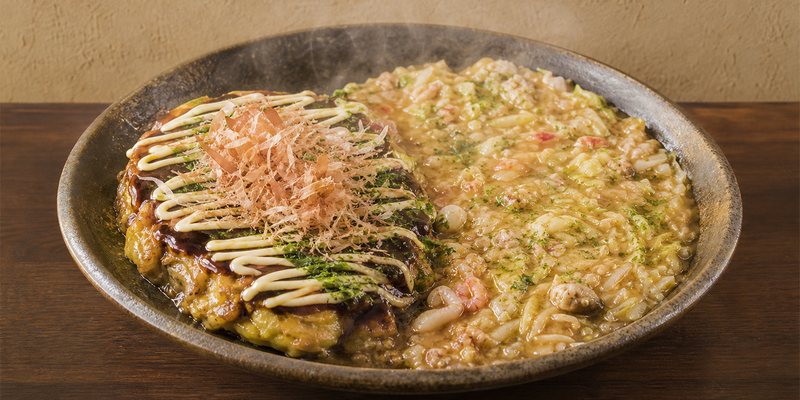
Welcome to the World of Monja and Okonomiyaki. Picture a table with a hot iron plate set into the middle of it. Oil spreads across the surface and begins to shimmer. A cook, or maybe you, lays down a heap of chopped cabbage, and it hisses. The smell of toasted sauce rises. All around the table, people lean in with tiny metal spatulas, waiting for their turn. Here is what makes this food so surprising. Monja and okonomiyaki are related. Both start with wheat flour. Both are cooked on an iron griddle. Yet they end up as two completely different ways to eat. Okonomiyaki is cooked into a round, solid pancake, then cut into wedges. Monja is cooked so wet that it never really sets. You do not cut it. You scoop it, a little at a time, with a tiny spatula, and press it against the hot plate until the edge turns crisp and toasty. Monja is one of Tokyo's own regional dishes. Its home is a neighborhood called Tsukishima, in Tokyo's Chuo Ward, where it was born in the poor years right after the war. Today, one shopping street in Tsukishima is nicknamed Monja Street, and about eighty monja shops line it. Over the next seven chapters, we will learn how to cook this food, how it began, and how to eat it like someone who has done it a hundred times. Three things are waiting for you along the way. First, the word "monja." It comes from a word meaning "letters," and it has to do with what children once did on a hot griddle. You will find out in Chapter 3. Second, okonomiyaki's ancestor. It was a children's snack from before the war, sold at neighborhood candy shops under three different names. You will meet all three in Chapter 3. Third, a town in Hiroshima Prefecture with its own local griddle dish. It swaps the noodles for rice, and the sauce for ponzu. Which town is it? The answer is in Chapter 4. And here is one question to carry with you. When you cook monja, you first build a ring out of the toppings, a doughnut shape with an empty hole in the middle. It is called the "dote," which means embankment. Why does the cook build that ring before anything else? Hold on to a guess. The answer comes in Chapter 2, and again at the very end. Here is how this guide works. There are seven chapters, about thirty minutes in all. Chapter 2 is the most hands-on: we stand at the griddle and cook. Chapter 3 is the story. Chapter 4 travels from Tsukishima to Osaka to Hiroshima. Chapter 5 is about the people who eat it. Chapter 6 is a handful of surprising facts. And Chapter 7 is short and practical: how to order, how to hold the spatula, and how to share the plate. Ready? Let's turn up the heat.
Explore the city. Taste Japan. Hear the Story.
Discover the landmarks of Tokyo, Kyoto & Osaka and Japanese food culture with GuideTunes — an audio guide app made for international travelers. From temples, streets, and historic spots to ramen, sushi, tempura, and local food experiences, GuideTunes helps you understand the stories behind what you see and what you eat. Make every walk and every meal part of your journey in Japan.