Language English
Taiyaki & Festival Snacks Audio Guide
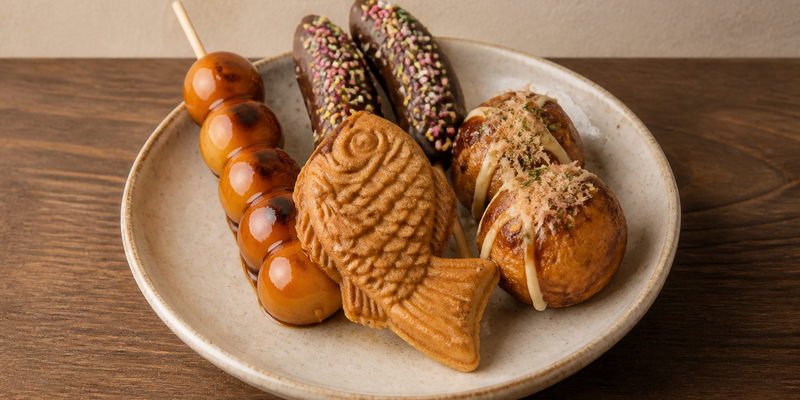
Baked in a sea-bream-shaped iron mould and filled with plenty of sweet bean paste, taiyaki is a beloved snack. Alongside imagawa-yaki, cotton candy, candied apples and the other treats that colour a Japanese fair, we cover its history, its types, regional differences, festival culture, the manners of eating while walking, and how to enjoy it, in six parts.
- 122 audio guides across Japan — Tokyo, Kyoto & Osaka
- Made for walking — it tells you where to stand and what to look at
- 3 days (1 city + food) ¥2,000 · 1 month (all cities) ¥3,000or this guide only ¥300 (7 days)
- 1Welcome to the World of Taiyaki & Festival SnacksFree
- 2How a Taiyaki Is Made
- 3The Story: From Imagawayaki to a Lucky Fish
- 4Fish, Wheels and Many Names: Varieties and Regions
- 5Japanese People and Festival Snacks
- 6Fun Facts You Can Share
- 7How to Enjoy It: Tips for Visitors
All chapters of this guide · 7 days — ¥300
Welcome to the World of Taiyaki & Festival Snacks
Transcript
Welcome to the World of Taiyaki and Festival Snacks. Picture a cold street corner in winter. A cook stands behind a small counter, holding a long-handled iron mould over the flame. Click. He flips it. Click. A thin curl of steam rises, and with it comes a smell of toasted flour and warm, sweet beans. In a few moments a paper bag is pressed into your hands, and through the paper you can feel the heat. Inside is a fish. A golden, crisp-skinned fish, with scales pressed into its sides and a smiling face, and nothing about it came from the sea. Let's begin with a surprise. This fish-shaped cake was not planned. The story goes that its round imagawayaki would not sell, a turtle-shaped version failed too, and then the sea bream shape sold like crazy. A cake that nobody wanted became one of the best-loved sweets in Japan, and the whole thing turned on one clever change of shape. Over the next seven chapters, we will follow that fish, and then wander on from it into the wider world of festival snacks: the sweet, sticky, golden things sold from stalls on the nights when a shrine's lantern-lit path fills with people. Three promises are waiting for you along the way. First, sea bream was not the first shape tried. Another shape flopped before it. You will hear exactly what it was, and why the fish won. Second, one round cake has dozens of names across Japan. One of those names was coined by a company in western Japan, and the story behind it involves a novel. Third, the stalls at a festival come from a day that was set aside for something much older than snacks. It was meant to form a bond with a deity or a Buddha. And here is one question to carry with you. Why is taiyaki shaped like a sea bream? And what could a warm snack from a street stall possibly have in common with a fish? Keep a guess in mind. The answer comes in Chapter 3, and once more at the very end. Here is how this guide works. There are seven chapters, about thirty minutes in all. Chapter 2 takes the fish apart: the beans, the batter and the iron moulds, and even the machine that spins sugar into a cloud. Chapter 3 is the story, from a shop in a Tokyo neighborhood to a hit song that every child in Japan knew. Chapter 4 is a map, because the same round cake changes its name from region to region. Chapter 5 is about the people, and about what a festival day really is. Chapter 6 is a handful of facts that surprise almost everyone. And Chapter 7 is short and practical: how to buy it, hold it, and eat it. That one is perfect for when you are standing in line. Ready? Let's look inside the fish.
Explore the city. Taste Japan. Hear the Story.
Discover the landmarks of Tokyo, Kyoto & Osaka and Japanese food culture with GuideTunes — an audio guide app made for international travelers. From temples, streets, and historic spots to ramen, sushi, tempura, and local food experiences, GuideTunes helps you understand the stories behind what you see and what you eat. Make every walk and every meal part of your journey in Japan.