Language English
Oden Audio Guide
Radish, egg, and fish cakes slowly soaking up a clear broth, oden is a winter staple. It grew from grilled dengaku into the simmered dish of Edo's food stalls. Across six parts we trace its history, meet its many ingredients and the broth differences between east and west, visit convenience-store oden, learn when it is eaten, master eating it with mustard, and enjoy comparing bowls.
- 122 audio guides across Japan — Tokyo, Kyoto & Osaka
- Made for walking — it tells you where to stand and what to look at
- 3 days (1 city + food) ¥2,000 · 1 month (all cities) ¥3,000or this guide only ¥300 (7 days)
- 1Welcome to the World of OdenFree
- 2How a Pot of Oden Comes Together
- 3The Story of Oden: From Dance to Pot
- 4Oden Across Japan: Broth, Skewers and Sauces
- 5Oden in Japanese Life
- 6Fun Facts You Didn't Expect
- 7Ordering and Eating Oden Well
All chapters of this guide · 7 days — ¥300
Welcome to the World of Oden
Transcript
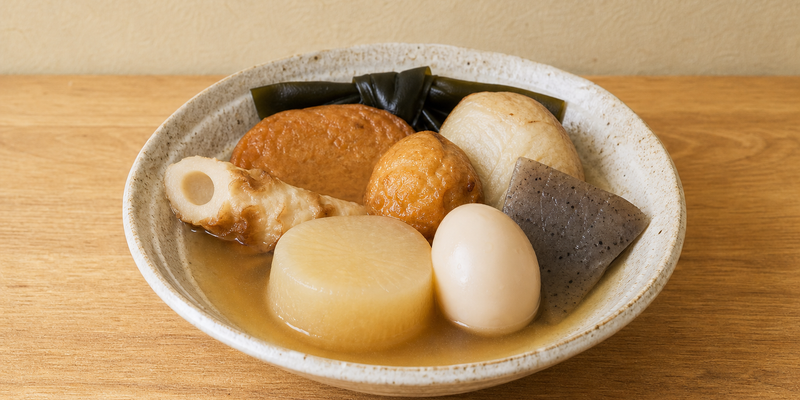
Welcome to the World of Oden. Picture a winter evening, and a small shop with a window fogged over from the inside. On the counter sits a wide, shallow pot, divided into little squares. Steam rises off it in slow curls. In the broth, pale white daikon radish, brown eggs, golden fried cakes, knots of kelp, and skewers of fish paste all bob gently together. The smell is soy sauce and the sea. Someone slides back the door, shakes the cold off a coat, points at the pot, and says only a few words. Moments later, a bowl arrives. It is hot enough that you wrap both hands around it before you take a single bite. That is oden. And here is the first surprise. Oden is said to have begun not as a simmered dish but as something grilled. The very first oden was a skewer, held over a fire, and brushed with miso. A dish that today is famous for sitting in broth for a long, slow simmer began its life dry, smoky, and on a stick. Over the next seven chapters, we will lift the lid on this pot, and follow its steam back through hundreds of years. Three things are waiting for you along the way. First, that grilled skewer. What exactly was on it? The answer is simple, and it explains why oden has the shape and the spirit it does. Second, in the Kansai region, around Osaka and Kyoto, people often call oden by a different name that means "Kanto-style stew." Kanto is the region around Tokyo. Yet the Kansai version tastes nothing like Tokyo's. So why is it named after a place it does not resemble? Third, in the city of Shizuoka, the broth is not golden or amber. It is pitch black. And people shake two surprising things over the top. Why is it black, and what goes on it? And here is one question to carry with you. The word oden is short and strange. Where does it come from? Keep a guess in mind. The answer comes in Chapter 3, and once more at the very end. Here is how this guide works. There are seven chapters, about thirty minutes in all. Chapter 2 is the kitchen: how the broth is made, how each ingredient is prepared, and how fish paste is born. Chapter 3 is the story of oden, from a rice-planting dance to the street stalls of old Tokyo. Chapter 4 is a trip across Japan, with a different broth, a different sauce, and a different surprise in each place. Chapter 5 is about the people who eat oden, and what the dish means in everyday life. Chapter 6 is a handful of small facts that make people say, really? And Chapter 7 is short and practical: how to order and eat your oden with confidence. Ready? Let's lift the lid.
Explore the city. Taste Japan. Hear the Story.
Discover the landmarks of Tokyo, Kyoto & Osaka and Japanese food culture with GuideTunes — an audio guide app made for international travelers. From temples, streets, and historic spots to ramen, sushi, tempura, and local food experiences, GuideTunes helps you understand the stories behind what you see and what you eat. Make every walk and every meal part of your journey in Japan.