Language English
Tempura Audio Guide
The light, crisp crackle of batter fresh from the oil. Tempura, one of Japan's signature dishes, wraps seasonal seafood and vegetables in a thin coating and fries them to a golden crunch. Across six parts we trace its history, from foreign origins to the food stalls of Edo, meet its ingredients from shrimp to whiting, compare east and west, explore when it is eaten, weigh salt against dipping sauce, and savor the pleasures of counter tempura.
- 122 audio guides across Japan — Tokyo, Kyoto & Osaka
- Made for walking — it tells you where to stand and what to look at
- 3 days (1 city + food) ¥2,000 · 1 month (all cities) ¥3,000or this guide only ¥300 (7 days)
- 1Welcome to the World of TempuraFree
- 2How a Plate of Tempura Is Made
- 3The Story of Tempura
- 4Kinds of Tempura and Local Flavors
- 5The Japanese and Tempura
- 6Fascinating Tempura Trivia
- 7Tips for Eating Tempura
All chapters of this guide · 7 days — ¥300
Welcome to the World of Tempura
Transcript
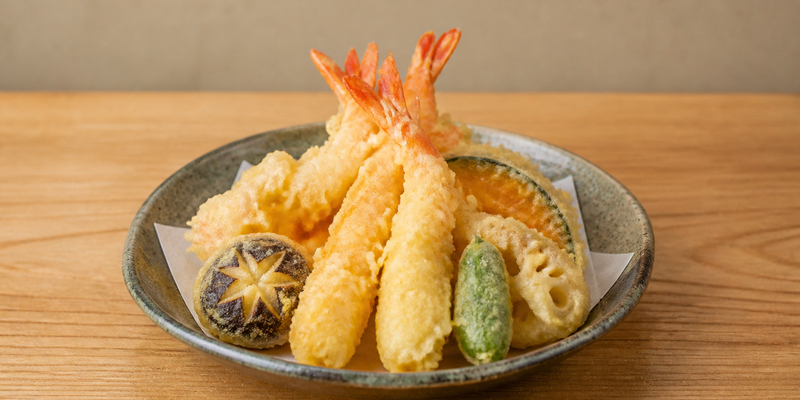
Welcome to the World of Tempura. Picture a long wooden counter, pale and polished. Behind it, a cook stands over a pot of shimmering oil. He dips a shrimp into a bowl of pale batter, holds it by the tail, and lets it slide into the oil. The oil answers with a loud, bright crackle. Tiny bubbles race up around the shrimp. A smell of toasted sesame drifts across the room. A minute later, the sound changes. It goes higher, lighter, almost like rain on a tin roof. The cook lifts the shrimp out, lets it rest for a breath, and lays it in front of you, golden and still hissing. Now here is a surprise to start with. Tempura is not an ancient Japanese dish. It is one of the most famous foods of Japan, and yet it did not begin in Japan at all. It traces back to what the Japanese called Nanban cooking. Nanban means "Southern Barbarian," the old name for the Europeans who arrived by ship in the Sengoku era, the age of warring lords. They brought their cannons, their religion, and their way of frying things in batter. Somewhere along the way, a foreign fritter became a symbol of Japan. Over the next seven chapters, we will take this plate apart, piece by piece, and then put it back together with its story. Three things are waiting for you. First, a good tempura cook does not need a thermometer. With a single drop of batter, he can read the temperature of the oil. And he can tell when the food is done by listening to it. You will learn how. Second, in the city of Edo, the old name for Tokyo, tempura was not sold in restaurants. It was sold at street stalls, by bridges and riverbanks. There was a very good reason for that, and it has to do with what the city looked like. Third, the word "tempura" itself. In parts of western Japan, ask for "tempura" and you may be handed something completely different from what you are picturing. You will find out what. And here is one question to carry with you. Which country did tempura come to Japan from, and where does the name come from? Keep a guess in mind. The answer comes in Chapter 3, and once more at the very end. Here is how this guide works. There are seven chapters, about thirty minutes in all. Chapter 2 takes the plate apart: the batter, the oil, the timing, and the sauce. Chapter 3 is the story, from a trading port in the sixteenth century to the busy streets of old Edo. Chapter 4 travels around Japan, one style at a time. Chapter 5 is about the people who eat tempura and the things they say about it. Chapter 6 is a collection of facts that surprise almost everyone. And Chapter 7 is short and practical: how to eat tempura as if you had been doing it for years. Ready? Let's step up to the counter and watch the oil.
Explore the city. Taste Japan. Hear the Story.
Discover the landmarks of Tokyo, Kyoto & Osaka and Japanese food culture with GuideTunes — an audio guide app made for international travelers. From temples, streets, and historic spots to ramen, sushi, tempura, and local food experiences, GuideTunes helps you understand the stories behind what you see and what you eat. Make every walk and every meal part of your journey in Japan.