Language English
Sushi Audio Guide
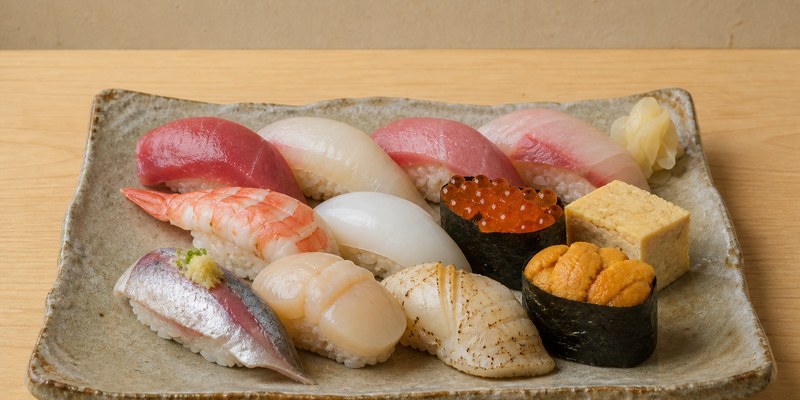
A bite-sized cushion of vinegared rice crowned with fresh fish: sushi, one of Japan's signature dishes. Born from the wisdom of preserving fish, it blossomed in old Edo into the hand-pressed nigiri we know. Across six parts we trace its history from fermented narezushi, decode styles from nigiri to gunkan, compare Edo-style and Kansai pressed sushi, explore festive days and conveyor-belt sushi, learn how to eat with the hands, and enjoy the counter.
- 122 audio guides across Japan — Tokyo, Kyoto & Osaka
- Made for walking — it tells you where to stand and what to look at
- 3 days (1 city + food) ¥2,000 · 1 month (all cities) ¥3,000or this guide only ¥300 (7 days)
- 1Welcome to the World of SushiFree
- 2How a Piece of Sushi Is Made
- 3The Story of Sushi
- 4Types and Regional Flavors
- 5Sushi and the Japanese
- 6Fascinating Sushi Trivia
- 7A Few Tips for Eating Sushi
All chapters of this guide · 7 days — ¥300
Welcome to the World of Sushi
Transcript
Welcome to the World of Sushi. Picture a plain wooden counter, and a chef standing behind it. He takes a small amount of rice in one hand, dabs a little wasabi on a slice of fish, presses the two together with a few quick movements, and sets the finished piece down in front of you. It sits there, glistening, for a few seconds. Then you pick it up, and it is gone in a bite. Here is a number to begin with. In 2025, a survey counted about one hundred and eighty-one thousand Japanese restaurants around the world, and at many of them, sushi is on the menu. Back in 2013, there were around fifty-five thousand. So the food culture behind the little piece in front of you has traveled very far from this counter, to nearly every corner of the globe. But the sushi you are about to eat is only the latest chapter of a very long story. The earliest form of sushi was nothing like this. It was fish packed in rice and left for months to ferment. And the rice? In the old days, people did not eat it. They threw it away and ate only the fish. In Shiga Prefecture, near Kyoto, that ancient kind of sushi is still made today. Over the next seven chapters, we are going to follow sushi from that fermenting tub to the counter in front of you. Three things are waiting for you along the way. First, nigiri, the hand-pressed sushi we know today, was born from impatience. Edo, the old Tokyo, was a city of people in a hurry. What they could not bear to wait for was an earlier kind of sushi that took a long time, even a whole night, under a heavy weight. Second, conveyor-belt sushi, the kind where plates ride past you on a moving track, came from a machine in a very unexpected kind of factory. You will find out which one. Third, one word you will hear at a sushi counter is said to trace back to the Buddha himself. Which word? We will get to that too. And here is a question to carry with you. Sushi from the Edo era was far bigger than the pieces you will eat today, and the rice had a different color. How much rice did a piece use back then, compared with now, and what color was it? Keep a guess in mind. The answer comes in Chapter 3, and once again at the very end. Here is how this guide works. There are seven chapters, about thirty minutes in all. Chapter 2 shows how one piece is made, from the vinegared rice to the fish to the wasabi. Chapter 3 is the story, from a fermented fish in a tub to a belt turning in a factory. Chapter 4 travels the country, one kind of sushi at a time. Chapter 5 is about the people who eat sushi in Japan, and the words they use. Chapter 6 gathers surprising facts. And Chapter 7 is short and practical: how to eat sushi comfortably at the counter. That last one is perfect to listen to just before you sit down. Ready? Let us start with a single piece of sushi, and see how it is made.
Explore the city. Taste Japan. Hear the Story.
Discover the landmarks of Tokyo, Kyoto & Osaka and Japanese food culture with GuideTunes — an audio guide app made for international travelers. From temples, streets, and historic spots to ramen, sushi, tempura, and local food experiences, GuideTunes helps you understand the stories behind what you see and what you eat. Make every walk and every meal part of your journey in Japan.