Language English
Tonkatsu Audio Guide
Cut through the golden-brown coating with a crisp snap and juicy pork appears amid the steam: that is Japanese tonkatsu. Born from Western cooking, it grew into a dish all Japan's own, the flagship of yoshoku. Across six parts we trace its history, the difference between loin and fillet, the character of each region, the roles of cabbage and sauce, how to eat it deliciously, and the culture of enjoying famous shops.
- 122 audio guides across Japan — Tokyo, Kyoto & Osaka
- Made for walking — it tells you where to stand and what to look at
- 3 days (1 city + food) ¥2,000 · 1 month (all cities) ¥3,000or this guide only ¥300 (7 days)
- 1Welcome to the World of TonkatsuFree
- 2How a Cutlet Is Made
- 3The Story: From Cutlet to Tonkatsu
- 4Types and Regional Flavors
- 5The Japanese and Tonkatsu
- 6Fascinating Facts
- 7Tips for Eating Tonkatsu
All chapters of this guide · 7 days — ¥300
Welcome to the World of Tonkatsu
Transcript
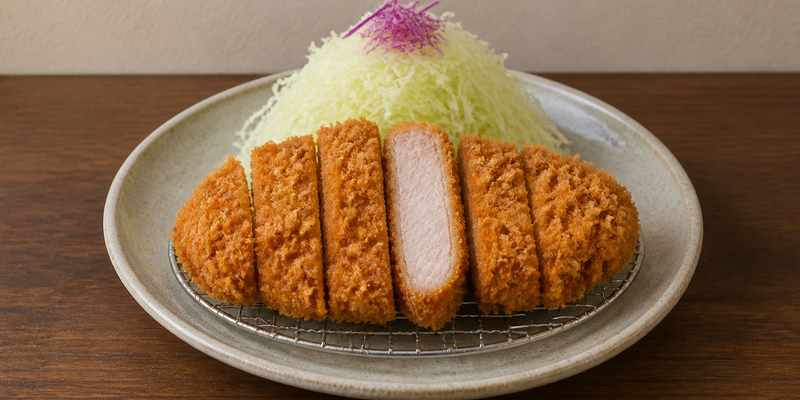
Welcome to the World of Tonkatsu. Picture a small counter with a low, steady hiss behind it. A cook lowers a thick slab of pork into a deep pan of oil, and the sound swells into a crackle. A few minutes later, the cutlet comes out gold and bristling with crumbs, and a blade goes through it with a loud, dry crunch. It lands on your tray in neat slices. Beside it sits a mound of finely shredded cabbage, a bowl of rice, a bowl of miso soup, and a little dish of dark sauce. The smell is toasted crumbs and hot oil, and it follows you to the table. Here is the surprise. This dish, which feels as Japanese as rice, began as an import from France. It started as a Japanese reworking of the French veal cutlet called côtelette. Veal coated in dry breadcrumbs and cooked in butter in a pan: that was the ancestor. Over the decades of tinkering in restaurant kitchens, that foreign dish turned into something many people in Japan now treat as their own. Over the next seven chapters, we will take this plate apart, from the crumbs to the cabbage, and then follow the story of how it got here. Three things are waiting for you along the way. First, that mound of shredded cabbage. Almost every tonkatsu set comes with it, and almost nobody asks why. There is a kitchen story behind it, and it involves a shortage of cooks. Second, the crunch. The coating on a Japanese cutlet is not like the dry, fine crumbs of Europe. It is a different kind of breadcrumb, with a different origin, and it is the reason for the sound you heard at the start. Third, the name. The word for cutlet, katsu, sounds exactly like the Japanese word for winning. People have been playing with that for a long time, and you will hear what they do with it. And here is one question to carry with you. A dish born for knife and fork arrives in Japan already sliced for chopsticks. Why? Keep a guess in mind. The answer comes in Chapter 3, and once more at the very end. Here is how this guide works. There are seven chapters, about thirty minutes in all. Chapter 2 takes the cutlet apart: the pork, the crumbs, the oil and the sauce. Chapter 3 tells the story, from a Ginza restaurant in 1895 to the shops of Ueno. Chapter 4 travels around Japan, one regional version at a time. Chapter 5 is about the people who eat it, and why they eat it when they do. Chapter 6 collects facts that surprise almost everyone. And Chapter 7 is short and practical: how to order and eat as if you had done it for years. Ready? Let us start with the cutlet itself.
Explore the city. Taste Japan. Hear the Story.
Discover the landmarks of Tokyo, Kyoto & Osaka and Japanese food culture with GuideTunes — an audio guide app made for international travelers. From temples, streets, and historic spots to ramen, sushi, tempura, and local food experiences, GuideTunes helps you understand the stories behind what you see and what you eat. Make every walk and every meal part of your journey in Japan.