Language English
Shabu-shabu Audio Guide
Swishing thin slices of meat briefly through hot broth and savoring them with sesame sauce or ponzu: that is shabu-shabu, a Japanese hot pot. From the charming origin of its name to its broth and dipping sauces, regional wagyu and branded pork, when Japanese people eat it, the knack of swishing and its manners, and the exceptional finish, we guide you across six parts.
- 122 audio guides across Japan — Tokyo, Kyoto & Osaka
- Made for walking — it tells you where to stand and what to look at
- 3 days (1 city + food) ¥2,000 · 1 month (all cities) ¥3,000or this guide only ¥300 (7 days)
- 1Welcome to the World of Shabu-shabuFree
- 2How a Pot of Shabu-shabu Comes Together
- 3The Story: From Beijing Pots to Osaka's Swish
- 4Kinds and Local Flavors
- 5Japanese People and Shabu-shabu
- 6Fascinating Facts
- 7Tips for Eating Shabu-shabu
All chapters of this guide · 7 days — ¥300
Welcome to the World of Shabu-shabu
Transcript
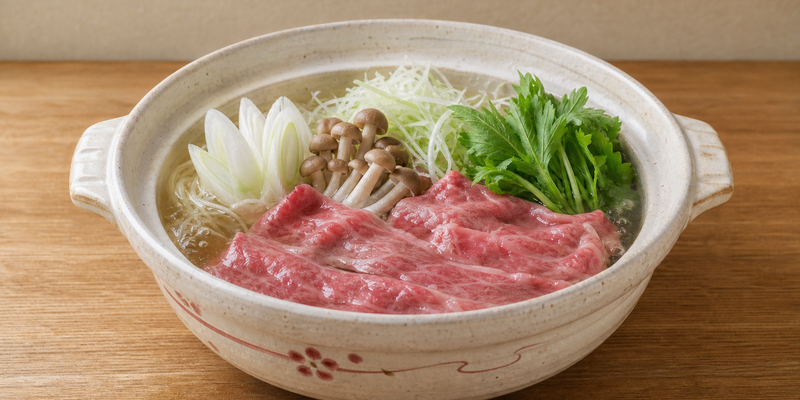
Welcome to the World of Shabu-shabu. Picture a table with a wide pot at its center. Pale steam rises from a kelp broth that is trembling just below a boil. A diner lifts a slice of beef so thin you could almost read through it, holds it in chopsticks, and sways it through the hot broth, back and forth, three seconds, maybe four. The red of the meat fades to pink. Out it comes, into a little bowl of sesame sauce, and into the mouth. Then the next slice goes in. Soft hissing. Quiet laughter. Steam on everyone's faces. Let's begin with a fact that surprises almost everyone. Shabu-shabu, the dish you picture on a freezing winter night, was first imagined for the heat of summer. It was meant for people who lose their appetite when the weather turns hot and heavy. The cozy winter image came later. Over the next seven chapters, we're going to lift this pot apart, one piece at a time, and then put it back together with its story. Three things are waiting for you along the way. First, I just told you that this winter favorite was first imagined for summer. In Chapter 3, you'll hear why. Second, look at a shabu-shabu pot and you'll often see a chimney rising from the middle of it. That chimney has a purpose, and you'll learn what it was originally for in Chapter 2. Third, shabu-shabu began as a Chinese dish. In Chapter 3, you'll meet its name, and the meaning of one very small, very important character. And one question to carry with you. The name "shabu-shabu" is a strange, bouncy, almost silly word. It came from a sound that someone heard in a restaurant. Where was it heard, and what made that sound? Keep a guess in mind. The answer comes in Chapter 3, and once more at the very end. Here's how this guide works. There are seven chapters, about thirty minutes in all. Chapter 2 takes the pot apart: the broth, the meat, the two famous sauces and the little dishes of toppings beside them. Chapter 3 is the story, from the winter streets of Beijing to a restaurant in Osaka, and from there to the whole country. Chapter 4 travels Japan, one pot at a time, and yes, there is shabu-shabu made with fish. Chapter 5 is about the people who eat it here, and the things they say it does for you. Chapter 6 is a handful of facts that surprise almost everyone. And Chapter 7 is short and practical: how to eat your pot as if you'd been doing it for years. That last one is perfect for when you're sitting down at the table. Ready? Let's lift the lid.
Explore the city. Taste Japan. Hear the Story.
Discover the landmarks of Tokyo, Kyoto & Osaka and Japanese food culture with GuideTunes — an audio guide app made for international travelers. From temples, streets, and historic spots to ramen, sushi, tempura, and local food experiences, GuideTunes helps you understand the stories behind what you see and what you eat. Make every walk and every meal part of your journey in Japan.