Language English
Yakiniku Audio Guide
Grilling meat until it sizzles over hot coals, then eating it with your favorite sauce or salt: that is Japanese yakiniku. How did a country that long avoided meat come to raise the grilled culture of wagyu beef? Across six parts we trace its history, the cuts from karubi to tongue and offal, regional beef from Matsusaka to Kobe, when Japanese people eat it, the knack of grilling it well yourself, and how to order and enjoy.
- 122 audio guides across Japan — Tokyo, Kyoto & Osaka
- Made for walking — it tells you where to stand and what to look at
- 3 days (1 city + food) ¥2,000 · 1 month (all cities) ¥3,000or this guide only ¥300 (7 days)
- 1Welcome to the World of YakinikuFree
- 2How a Plate of Yakiniku Comes Together
- 3The Story of Yakiniku
- 4Cuts and Regional Flavors
- 5The Japanese and Yakiniku
- 6Fascinating Facts About Yakiniku
- 7Tips for Eating Yakiniku
All chapters of this guide · 7 days — ¥300
Welcome to the World of Yakiniku
Transcript
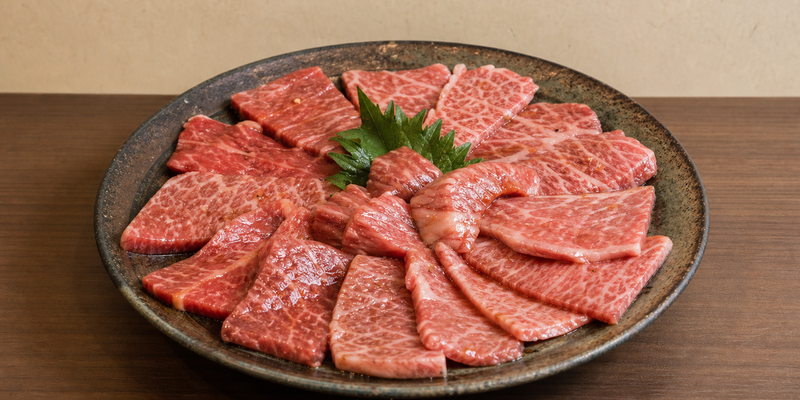
Welcome to the World of Yakiniku. Picture a low table with a round hole cut into its middle. Under that hole, a flame, and above it, a metal grate already humming with heat. Beside your elbow sits a tiny dish of dark sauce. In your hand, a pair of tongs, clicking in the air out of pure excitement. A plate arrives, piled with thin slices of beef, pink and glossy, and the first one touches the grate with a sizzle so sharp that the whole table leans in. A thin curl of smoke rises, carrying the smell of caramelized soy and fat. Someone laughs. Someone says, "Wait, wait, not yet." That is yakiniku. Let's begin with a surprise. You might assume that grilled meat is simply grilled meat, an ancient idea found everywhere on Earth. But the head of Japan's national yakiniku association says something different. He describes yakiniku as a food culture born in postwar Japan, with Korean cuisine added along the way to form the dishes we know today. The word itself means "grilled meat." The way of eating it, with the guests doing the cooking at the table and dipping each piece into sauce, is its own thing. So when you sit down at that table, you are taking part in something that is not very old at all. The history of yakiniku restaurants is only about seventy years long, and you will hear it in Chapter 3. Over the next seven chapters, we're going to look at the grate, the sauce, the strange names on the menu, and the people who made it all happen. Three things are waiting for you along the way. First, there is a story behind one machine above your grill. It once brought eight fire engines racing to a restaurant. Second, there is a word printed on nearly every yakiniku menu: karubi. It looks like the name of a cut of beef. But it isn't. So what is it? Third, there is a cut called harami. It looks like plain, lean red meat. It hides a surprising identity. And one question to carry with you. Why do we dip grilled meat into a small dish of sauce before eating it? Think about it for a moment. We will answer it in Chapter 3, and once more at the very end. Here's how this guide works. There are seven chapters, about thirty minutes in all. Chapter 2 is about the grill itself: the fire, the smoke, and the sauce. Chapter 3 is the story, from a ban on eating meat to a smoke-sucking machine. Chapter 4 is a tour of the cuts and of the regions of Japan. Chapter 5 is about the people who eat yakiniku here. Chapter 6 is a handful of facts that surprise almost everyone. And Chapter 7 is short and practical: how to order and eat as if you'd done it many times. That one is perfect for when you're waiting for a table. Ready? Let's light the fire.
Explore the city. Taste Japan. Hear the Story.
Discover the landmarks of Tokyo, Kyoto & Osaka and Japanese food culture with GuideTunes — an audio guide app made for international travelers. From temples, streets, and historic spots to ramen, sushi, tempura, and local food experiences, GuideTunes helps you understand the stories behind what you see and what you eat. Make every walk and every meal part of your journey in Japan.