Language English
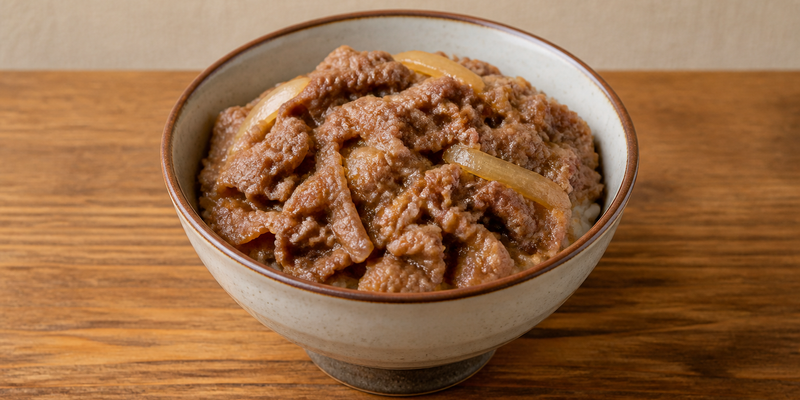
Gyudon Audio Guide
Beef and onion simmered sweet and savory over warm rice: that is Japanese gyudon. Cheap, fast, and tasty, a humble taste that has fed the stomachs of working people. Across six parts we trace its history, the culture of the chain shops, how to order it with tsuyudaku and more, when Japanese people eat it, the culture of meal tickets and speed, and how to enjoy it.
- 122 audio guides across Japan — Tokyo, Kyoto & Osaka
- Made for walking — it tells you where to stand and what to look at
- 3 days (1 city + food) ¥2,000 · 1 month (all cities) ¥3,000or this guide only ¥300 (7 days)
- 1Welcome to the World of GyudonFree
- 2How a Bowl Comes Together
- 3A Story from the Fish Market
- 4Gyudon, Gyumeshi and Their Cousins
- 5The Japanese and Gyudon
- 6Things You Didn't Know About Gyudon
- 7How to Enjoy Your Bowl
All chapters of this guide · 7 days — ¥300
Welcome to the World of Gyudon
Transcript
Welcome to the World of Gyudon. Picture a counter in the early morning. Steam rises from a wide pot, and in it, thin slices of beef and soft onion are bubbling away in a dark, sweet-savory sauce. A cook scoops a ladleful over a deep bowl of rice. The smell of soy sauce and caramelized onion drifts across the room. A man in work boots sits down, and before you've finished noticing him, he is already halfway through his bowl. Chopsticks, a few quick mouthfuls, a sip of tea, and he's gone, back to work. That is gyudon, literally "beef bowl." Beef and onion simmered in sauce and spooned over rice. It looks like the simplest meal in the world. But here is the thing that surprises almost everyone. Behind that one bowl lies more than a hundred years of history. It began in a fish market. It was burned out of its home by an earthquake, and then burned out again by wartime air raids. Its company went bankrupt. And one winter day in 2004, it vanished from the menu altogether. Over the next seven chapters, we're going to take this bowl apart, and then put it back together with its story. Three things are waiting for you along the way. First, the beef. The cut on top of a gyudon bowl comes from a part of the animal that other trading companies once paid very little attention to, until one company decided to buy it. Second, for about twelve hundred years, eating meat was banned in Japan. The day that ban was lifted is where the story of gyudon really begins. Third, one day in 2004, gyudon vanished from the menu of the very shop where this story begins. And then there was a long wait for it to come back. And one question to carry with you. On the gyudon menu there is an everyday item that began with a bowl lid being turned upside down and used as a plate. What is it? Keep a guess in mind. The answer comes in Chapter 6, and once more near the end. Here's how this guide works. There are seven chapters, about thirty minutes in all. Chapter 2 takes the bowl apart: beef, onion, sauce, rice and ginger. Chapter 3 is the story, from a ban on meat to a bowl served at dawn to fish-market workers. Chapter 4 looks at gyudon's cousins, the different chains and the different names. Chapter 5 is about the people who eat it here, and the things people say about it. Chapter 6 is a handful of facts that surprise almost everyone. And Chapter 7 is short and practical: how to order and enjoy your bowl, including the secret orders that regulars use. That last one is perfect for when you're standing at a counter. Ready? Let's look inside the bowl.
Explore the city. Taste Japan. Hear the Story.
Discover the landmarks of Tokyo, Kyoto & Osaka and Japanese food culture with GuideTunes — an audio guide app made for international travelers. From temples, streets, and historic spots to ramen, sushi, tempura, and local food experiences, GuideTunes helps you understand the stories behind what you see and what you eat. Make every walk and every meal part of your journey in Japan.