Language English
Motsunabe Audio Guide
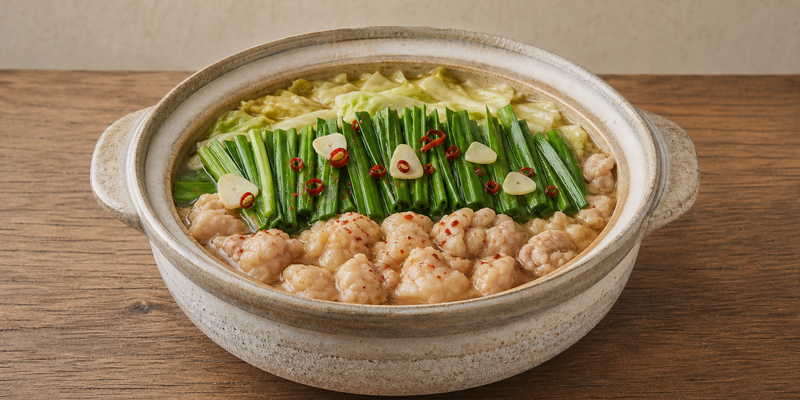
Springy offal, heaps of cabbage and garlic chives, and a garlic-scented broth to gather around: that is motsunabe, a hot pot born in Hakata in Kyushu. Across six parts we trace its history from a humble nourishing dish to a nationwide favorite, its soy and miso broths, the offal culture of its Hakata home, when Japanese people eat it, how to cook it and its manners, and the champon-noodle finish.
- 122 audio guides across Japan — Tokyo, Kyoto & Osaka
- Made for walking — it tells you where to stand and what to look at
- 3 days (1 city + food) ¥2,000 · 1 month (all cities) ¥3,000or this guide only ¥300 (7 days)
- 1Welcome to the World of MotsunabeFree
- 2How a Pot of Motsunabe Comes Together
- 3The Story of Motsunabe
- 4Styles and Local Flavors
- 5Japanese People and Motsunabe
- 6Fascinating Facts
- 7Tips for Eating Motsunabe
All chapters of this guide · 7 days — ¥300
Welcome to the World of Motsunabe
Transcript
Welcome to the World of Motsunabe. Picture a shallow steel pot, set over a flame at the center of the table. Inside, the broth is just starting to shiver. On top lies a heap of green garlic chives, piled so high they spill over the edge. Slivers of garlic float among them. A few rings of dried red chili drift on the surface. The smell reaches you before the pot has even begun to boil: soy sauce, garlic, and something rich and deep underneath. Around the table, people lean in, chopsticks ready, waiting for the moment the cabbage goes soft. This is motsunabe, a hot pot of beef offal and vegetables. It is a signature local dish of Fukuoka, a city on the island of Kyushu. Here is the surprise. By the standards of Japanese food, this pot is young. It is described as a dish born in the postwar Showa era, with a short history behind it. And yet it leapt to nationwide fame. It became such a boom that the word itself won a bronze prize in Japan's buzzword awards. Over the course of this guide, we are going to lift the lid on this pot, piece by piece, and then put it back together with its story. Three things are waiting for you along the way. First, the word "motsu." Before it was the name of a hot pot, it belonged to a particular group of people, and it was their word. You will learn whose. Second, a cut called hachinosu. The name means "beehive." One look at it, and you will see exactly why. Third, a year. In one particular year, a hot pot made of offal became a national craze. You will find out which year. And one question to carry with you. Who started motsunabe, and when, and where? Everyone loves a clean answer to that kind of question. This dish does not give you one. Keep your own guess in mind. We come back to the question in Chapter 3, and once more at the very end. Here is how this guide works. There are seven chapters, about thirty minutes in all. Chapter 2 takes the pot apart: the offal, the broth, the vegetables, and the shallow pan. Chapter 3 is the story, with its many competing beginnings. Chapter 4 looks at styles and differences from shop to shop. Chapter 5 is about the people who eat it, and the things they say it does for you. Chapter 6 is a handful of facts that surprise almost everyone. And Chapter 7 is short and practical: how to cook and eat your pot as if you had been doing it for years. That last one is perfect for when you are sitting at the table, waiting for the broth to boil. Ready? Let's look inside the pot.
Explore the city. Taste Japan. Hear the Story.
Discover the landmarks of Tokyo, Kyoto & Osaka and Japanese food culture with GuideTunes — an audio guide app made for international travelers. From temples, streets, and historic spots to ramen, sushi, tempura, and local food experiences, GuideTunes helps you understand the stories behind what you see and what you eat. Make every walk and every meal part of your journey in Japan.