Language English
Miso Soup & Rice Audio Guide
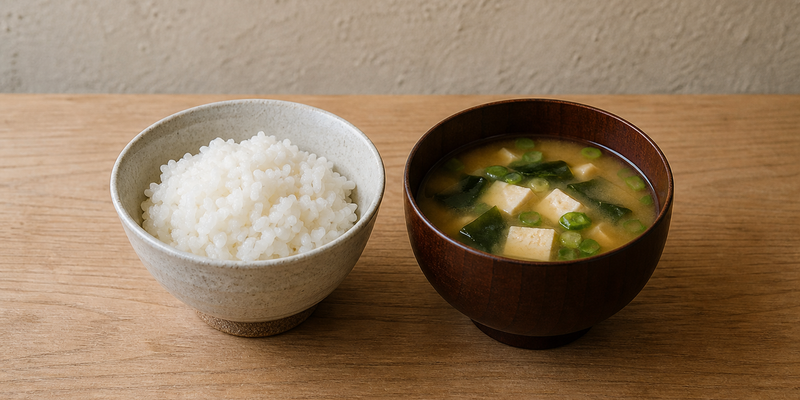
A bowl of steaming white rice and a comforting cup of miso soup, the very origin of the Japanese table. Across six parts we trace the history of how miso was born, tell apart red, white, and blended miso, travel to regional flavors, unpack the ichiju-sansai meal and breakfast culture, learn how to hold the bowls and the manners of eating, and share how to enjoy a set meal, guiding you through the charm of Japan's everyday food.
- 122 audio guides across Japan — Tokyo, Kyoto & Osaka
- Made for walking — it tells you where to stand and what to look at
- 3 days (1 city + food) ¥2,000 · 1 month (all cities) ¥3,000or this guide only ¥300 (7 days)
- 1Welcome to the World of Miso Soup & RiceFree
- 2How a Bowl Is Made
- 3The Story of Miso Soup
- 4Kinds of Miso and Local Flavors
- 5Japanese People and Miso Soup & Rice
- 6Fascinating Facts
- 7A Little Care When You Eat
All chapters of this guide · 7 days — ¥300
Welcome to the World of Miso Soup & Rice
Transcript
Welcome to the World of Miso Soup & Rice. Picture an early morning in a small kitchen. A pot is murmuring on the stove. Somebody lifts the lid, and a cloud of steam rises, carrying the smell of toasted soybeans and the sea. A lacquer bowl is filled, and two hands wrap around it to feel the warmth. On the tray beside it sits a bowl of rice, every grain shining. Soup on the right, rice on the left. This is one of the most ordinary sights in Japan, and one of the most loved. Let's begin with a number. A bowl of rice holds about three thousand two hundred and fifty grains, by one count. That's the harvest of about two rice plants, and it's what many people in Japan eat without a second thought, several times a day. Over the next seven chapters, we'll take this humble pair apart. We'll look at the tubs, the stones, the stock, the steam, and then put the whole meal back together with its story. Three things are waiting for you along the way. First, one famous kind of miso is packed into wooden tubs holding about six tons. Then a mountain of river stones is piled on top, and the miso sleeps beneath it for more than two years. How heavy is that pile of stones? Second, before it was ever a soup, miso was eaten in a very different way. And the thing that turned it into soup was not an ingredient at all. It was a kitchen tool. Third, on a Japanese tray, the rice and the soup each have a fixed side. Rice on the left, soup on the right. People have explanations for why, and you'll hear them. And one question to carry with you. About how many grains of rice sit in one bowl, and how many rice plants is that? I just gave you a number, but hold on to the question, because the answer comes with a little more detail in Chapter 6, and again at the very end. Here's how this guide works. There are seven chapters, about thirty minutes in all. Chapter 2 shows you how a bowl is made, from the miso tub to the pot of rice. Chapter 3 is the story, from a rare luxury of the rich to the bowl on your table. Chapter 4 travels Japan, one kind of miso at a time. Chapter 5 is about the people who eat this meal every day, and what they say about it. Chapter 6 is a handful of facts that surprise almost everyone. And Chapter 7 is short and practical: how to eat it the way it's meant to be eaten. It's a good one to save for when you're sitting down to a meal. Ready? Let's look inside the bowl.
Explore the city. Taste Japan. Hear the Story.
Discover the landmarks of Tokyo, Kyoto & Osaka and Japanese food culture with GuideTunes — an audio guide app made for international travelers. From temples, streets, and historic spots to ramen, sushi, tempura, and local food experiences, GuideTunes helps you understand the stories behind what you see and what you eat. Make every walk and every meal part of your journey in Japan.