Language English
Kappabashi Kitchen Town Audio Guide
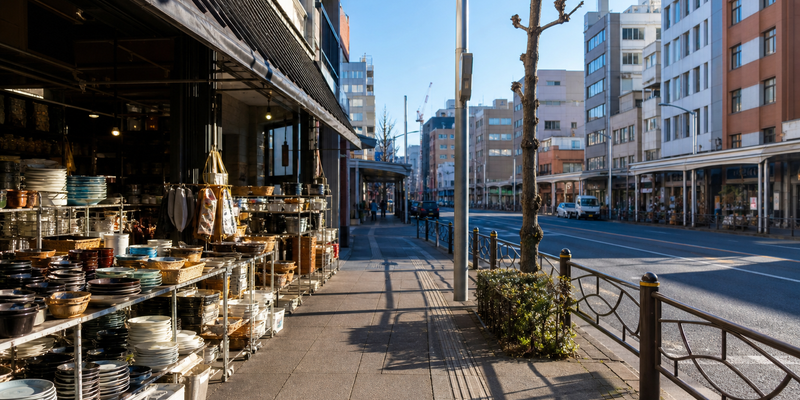
Between Asakusa and Ueno stretches an 800-meter street where more than 170 tool shops stand side by side, a mecca for cooks. From lifelike food samples and the Japanese knives that chefs travel the world to buy, to tableware, lacquerware, shop curtains, and lanterns, these eight tracks walk you slowly through the town of tools that quietly supports Japan's food culture, covering its history, how to enjoy it, and even tax-free shopping tips.
- 122 audio guides across Japan — Tokyo, Kyoto & Osaka
- Made for walking — it tells you where to stand and what to look at
- 3 days (Tokyo + food) ¥2,000 · 1 month (all cities) ¥3,000or this guide only ¥700 (7 days)
- 1Welcome to Kappabashi Kitchen TownFree
- 2The Story of Kappabashi
- 3Food Samples, the Art You Cannot Eat
- 4Knives, a Chef's Pilgrimage
- 5Tableware and Lacquerware
- 6Noren Curtains and Lanterns
- 7The Professional Kitchen
- 8The Kappa Statue and Its Legend
- 9Shopping Tips and Tax-Free
All chapters of this guide · 7 days — ¥700
Welcome to Kappabashi Kitchen Town
Transcript
Welcome to Kappabashi Kitchen Town. Halfway between Asakusa and Ueno, there is a street of unusual shop windows. They are full of knives, plates, pots, paper lanterns, and bowls of noodles that look hot enough to eat but are made of plastic. This is where the restaurants of Tokyo come to buy their tools. Anyone can shop here. But the best of this place shows itself to those who look closely. Look into a window full of food models, and try to tell which is real. Look up at the roof of one building, where a giant chef keeps watch. Find a small golden figure standing in a little park beside the street. And learn the signal that a strip of cloth over a doorway sends to everyone who passes. Here is a question to carry with you. This is a street of kitchen tools. So why is it named after a kappa, a creature from Japanese folk tales that lives in rivers? You will find the answer near the end of the walk, in the eighth chapter. This guide has nine chapters, including this one. Each of the others is told at one stop along the street. We start at the southern end, walk north past the food models, the knives, the tableware, the curtains, and the kitchen equipment, and meet the kappa before we finish. The narration runs about thirty-eight minutes in all, and if you plan to shop, allow about two hours. The shops here serve professional cooks. Please handle knives and dishes with care, and ask before you take photos inside a shop. So first, come to the southern end of the street, at the Kikuyabashi crossing on Asakusa-dori. It is about five minutes on foot from Tawaramachi Station. Stand where you can look north along the street, and play the next chapter.
Explore the city. Taste Japan. Hear the Story.
Discover the landmarks of Tokyo, Kyoto & Osaka and Japanese food culture with GuideTunes — an audio guide app made for international travelers. From temples, streets, and historic spots to ramen, sushi, tempura, and local food experiences, GuideTunes helps you understand the stories behind what you see and what you eat. Make every walk and every meal part of your journey in Japan.