Language English
Nijo Castle Audio Guide
Nijo Castle, built by Tokugawa Ieyasu in 1603, where the age of the shoguns began and ended. The Karamon Gate, the "nightingale floor" corridors of Ninomaru Palace, the Ohiroma hall of the return of power, the gardens and the site of the keep. An audio guide in ten chapters.
- 122 audio guides across Japan — Tokyo, Kyoto & Osaka
- Made for walking — it tells you where to stand and what to look at
- 3 days (Kyoto + food) ¥2,000 · 1 month (all cities) ¥3,000or this guide only ¥700 (7 days)
- 1Welcome to Nijo CastleFree
- 2The East Main Gate — A Castle Built as the Shogun's Lodging
- 3The Karamon Gate — Vivid Carvings, and the Secret of the Hollyhock Crest
- 4Ninomaru Palace — Walking the Nightingale Floors
- 5The Ohiroma — From the First Shogun's Celebration to the Return of Power
- 6The Kuro-shoin and Shiro-shoin — Quieter the Further In
- 7The Ninomaru Garden — A Garden with Islands of the Immortals
- 8The Honmaru — A Palace That Burned, and a Palace That Was Moved
- 9The Keep Site — A Five-Story Keep Burned by Lightning
- 10Seiryu-en — From the Shogun's Castle to Everyone's Castle
All chapters of this guide · 7 days — ¥700
Welcome to Nijo Castle
Transcript
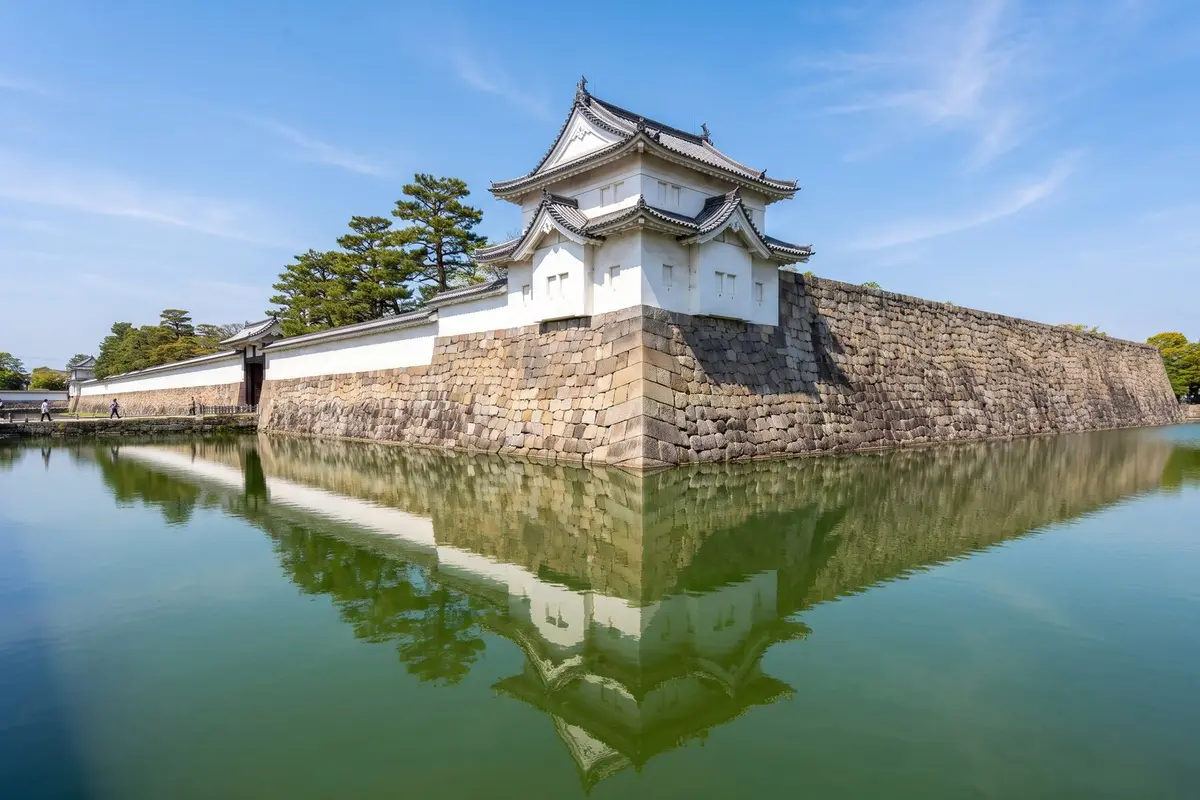
Welcome to Nijo Castle. In the heart of Kyoto, beside Horikawa Street, stands a vast castle surrounded by moats and stone walls. It was built in 1603 by Tokugawa Ieyasu, founder of the Edo shogunate, and its formal name is "Former Imperial Villa Nijo Castle." In 1994, it was inscribed as a World Heritage Site, one of the Historic Monuments of Ancient Kyoto. But this castle holds many stories that are easy to miss at first glance. Take the corridors of the palace. Some of the floors make a sound like birds singing when you walk on them. Why do they sing? I'll explain the mechanism as you walk. And this castle has a great hall that was the stage for a day when Japanese history changed course. Surrounded by golden paintings, what was announced in that room? What's more, a five-story keep once towered over the inner citadel. Why is only its stone base left today? I'll tell you each of these stories along the way. Here is a question to carry with you. This castle was built for the shogun. So why is it that today, any of us can visit and walk through it? I'll give you the answer in the last chapter. This guide has ten chapters: from the East Main Gate to the Karamon Gate, Ninomaru Palace, the Ninomaru Garden, the Honmaru, the site of the castle keep, and the Seiryu-en Garden. There is one chapter for each place. When you arrive, play the next chapter. The narration runs about forty minutes in all. If you visit only Ninomaru Palace and its garden, allow an hour and a half to two hours. If you go on to the Honmaru, allow two and a half to three hours. Photography is not allowed inside Ninomaru Palace. You'll take off your shoes to go in, so shoes that slip on and off easily are a good idea. Please don't touch the stone walls or buildings, and walk slowly so as not to disturb others. Now, make your way to the East Main Gate of Nijo Castle, the large gate just across the outer moat. When you get there, play the next chapter.
Explore the city. Taste Japan. Hear the Story.
GuideTunes brings Kyoto's temples, shrines, gardens and old streets together in one audio guide app. Put in your earphones and hear the history and stories behind each place as you walk. The first chapter of every guide is free.