Language English
Pontocho and the Kamo River Audio Guide
Pontocho, a lantern-lit stone alley between the Kamo River and the Takase River. The riverbank where kabuki was born, the summer dining decks, the little signs in the alleys and the theater of the Kamogawa Odori, from Shijo to Sanjo. An audio guide in seven chapters.
- 122 audio guides across Japan — Tokyo, Kyoto & Osaka
- Made for walking — it tells you where to stand and what to look at
- 3 days (Kyoto + food) ¥2,000 · 1 month (all cities) ¥3,000or this guide only ¥700 (7 days)
- 1Welcome to Pontocho and the Kamo RiverFree
- 2Shijo Bridge: The Kamo River and the Birth of Kabuki
- 3The Kamo Riverbank: Evenly Spaced Couples and Summer Decks
- 4Pontocho's South Entrance: A Curious Name and How the Town Began
- 5Pontocho's Lane and Alleys: The "You Can Go Through" Signs
- 6The Pontocho Kaburenjo: Stage of the Kamogawa Odori
- 7Sanjo Bridge: The End of the Tokaido and the Town of Plovers
All chapters of this guide · 7 days — ¥700
Welcome to Pontocho and the Kamo River
Transcript
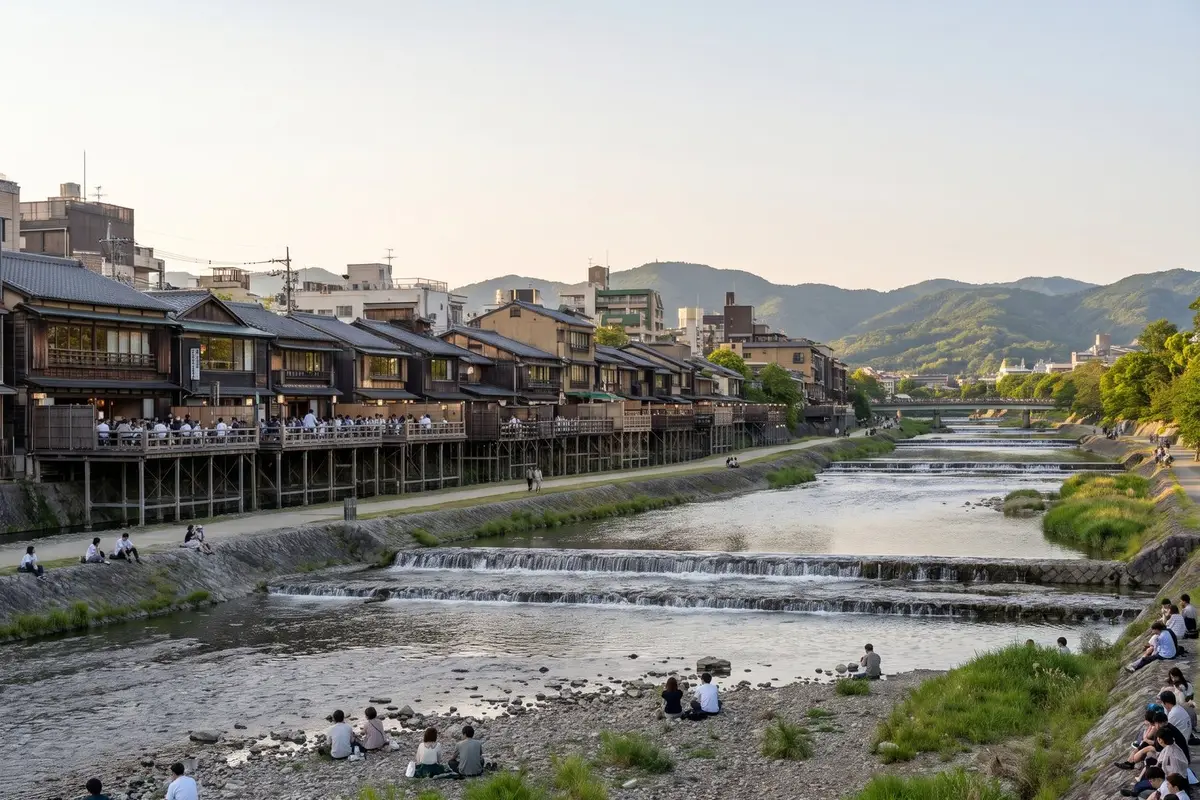
Welcome to Pontocho and the Kamo River. The Kamo River flows north to south through the heart of Kyoto. Along its west bank runs a narrow stone-paved lane, in places barely wide enough for one person. This is Pontocho. On both sides, wooden townhouses with lattice doors and shops hung with lanterns stand packed together. By day it's quiet. But when the sun goes down, the lanterns light up and it becomes one of the most atmospheric night streets in all of Kyoto. In this guide, you'll hear how one of Japan's great traditional performing arts was born on the banks of the Kamo River. You'll discover a uniquely Kyoto way of keeping cool, on decks lined up above the summer river. You'll solve the mystery of the little signs hanging at alley entrances. And you'll see a bridge that may still carry sword marks from the final years of the samurai era. Before we begin, here is a question to carry with you. As you walk along Pontocho, you'll notice a little bird drawn on the lanterns and signs. What kind of bird is it? And why is that bird the symbol of this neighborhood? You'll hear the answer in the final chapter. This guide has seven chapters. From Shijo Bridge you'll go down to the riverbank, then walk north up Pontocho from its south entrance, past the Kaburenjo theater, and finish at Sanjo Bridge. When you reach each spot, play the next chapter. The narration runs about twenty-two minutes in all. Pontocho is a neighborhood where people still live and work. Many of the back alleys are private property. Please don't enter alleys without signs; just look from the entrance. And if you see maiko or geiko, please don't stop them, and don't follow them to take photos. Now, make your way onto Shijo Bridge, near its west end. When you get there, play the next chapter.
Explore the city. Taste Japan. Hear the Story.
GuideTunes brings Kyoto's temples, shrines, gardens and old streets together in one audio guide app. Put in your earphones and hear the history and stories behind each place as you walk. The first chapter of every guide is free.