Language English
Kitano Tenmangu Shrine Audio Guide
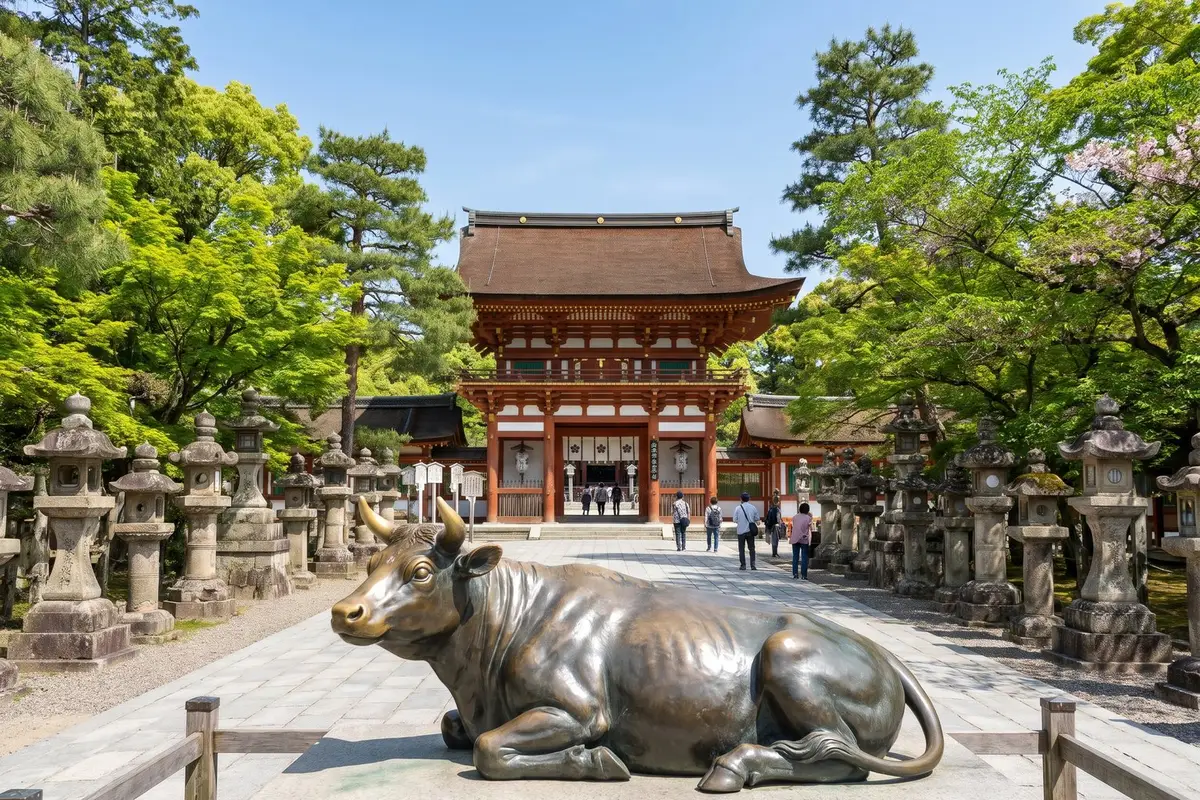
Kitano Tenmangu, "Tenjin-san," the shrine of the god of learning. The ox you stroke, the missing star on the Sankomon gate, the tale of the plum tree that flew to Kyushu, and why the shrine was built out of fear, from the first torii to the Odoi earthen wall. An audio guide in seven chapters.
- 122 audio guides across Japan — Tokyo, Kyoto & Osaka
- Made for walking — it tells you where to stand and what to look at
- 3 days (Kyoto + food) ¥2,000 · 1 month (all cities) ¥3,000or this guide only ¥700 (7 days)
- 1Welcome to Kitano TenmanguFree
- 2The First Torii and the Approach: Sugawara no Michizane, a Brilliant Scholar
- 3The Stroking Ox: Why the Ox Became the God's Messenger
- 4The Romon and Sankomon Gates: The Gate Without a Star
- 5The Main Sanctuary: Hideyori's Yatsumune-zukuri
- 6The Plum Garden and the Tobiume: The Plum That Flew to Kyushu
- 7The Odoi and the Maple Garden: How He Became the God of Learning
All chapters of this guide · 7 days — ¥700
Welcome to Kitano Tenmangu
Transcript
Welcome to Kitano Tenmangu. In northwestern Kyoto, facing Imadegawa-dori, stands a large stone torii gate. At the end of the approach beyond it is Kitano Tenmangu. Kyoto locals affectionately call it "Tenjin-san." It's known as the shrine of the god of learning, and every exam season the grounds fill with people praying to pass. It's one of the original shrines of the more than ten thousand Tenmangu and Tenjin shrines across Japan. On this walk, you'll meet an ox whose head is said to make you smarter when you stroke it, pass through a mysterious gate with no star carved on it, and hear about a plum tree that flew through the sky all the way to Kyushu. Before we begin, here is a question to carry with you. Today, the god of this shrine is loved as the god of learning. But when the shrine was built more than a thousand years ago, it was for a reason that had nothing to do with learning. What was that reason? You'll hear the answer in the final chapter. This guide has seven chapters: from the first torii along the approach, to the stroking ox, the Romon and Sankomon gates, the main sanctuary, the plum garden, and the old earthen embankment west of the main sanctuary. When you reach each spot, play the next chapter. The narration runs about twenty-two minutes in all. Before passing through a torii or a gate, give a small bow. Now, head to the first torii facing Imadegawa-dori. When you get there, play the next chapter.
Explore the city. Taste Japan. Hear the Story.
GuideTunes brings Kyoto's temples, shrines, gardens and old streets together in one audio guide app. Put in your earphones and hear the history and stories behind each place as you walk. The first chapter of every guide is free.