Language English
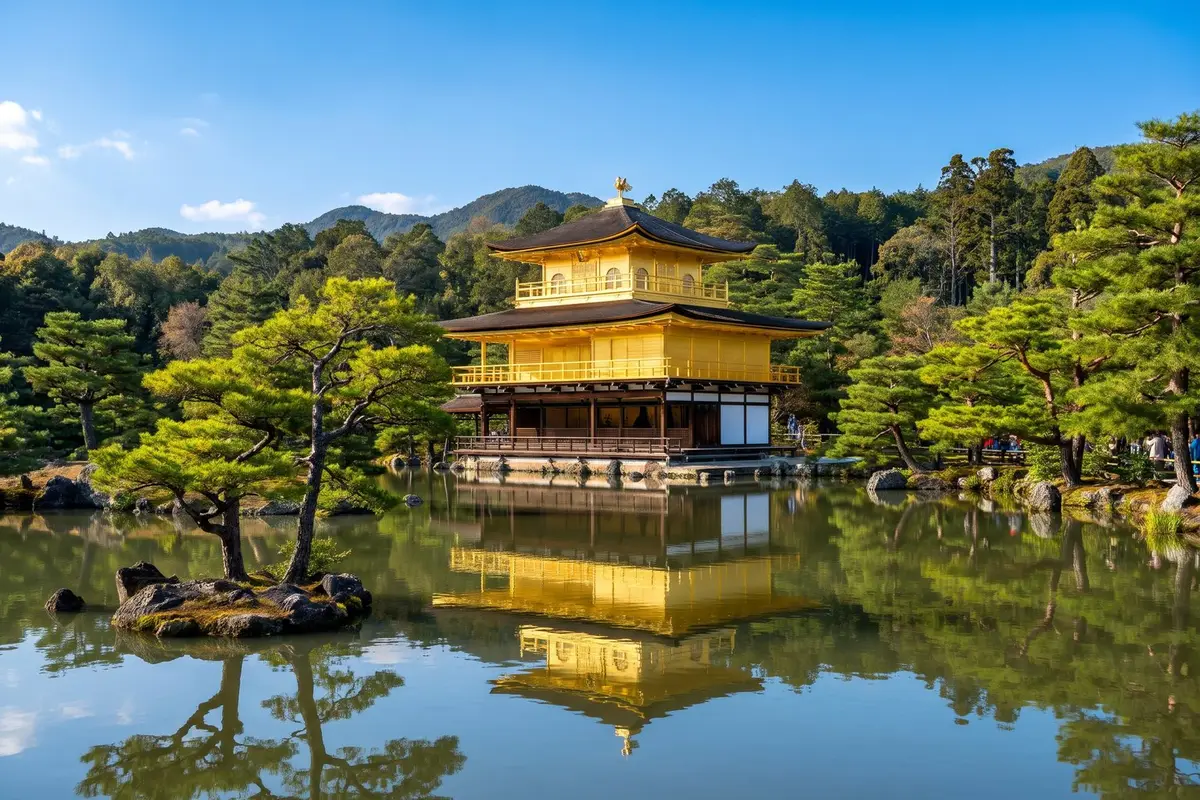
Kinkaku-ji Temple (The Golden Pavilion) Audio Guide
Kinkaku-ji, the Golden Pavilion mirrored in its pond, Ashikaga Yoshimitsu's villa turned Zen temple. The Mirror Pond, three floors each built in a different style, the Land Boat Pine, Ryumon Falls, the Sekkatei teahouse and more, along the garden route. An audio guide in ten chapters.
- 122 audio guides across Japan — Tokyo, Kyoto & Osaka
- Made for walking — it tells you where to stand and what to look at
- 3 days (Kyoto + food) ¥2,000 · 1 month (all cities) ¥3,000or this guide only ¥700 (7 days)
- 1Welcome to Kinkaku-jiFree
- 2Where the Story Begins — A Dream Painted in Kitayama
- 3Kyokochi, the Mirror Pond — Reflecting a Dream of Glory
- 4The Golden Pavilion — Three Floors, and a Villa That Became a Temple
- 5The Land Boat Pine — A Summer of Fire, and the Pavilion Reborn
- 6Gingasen Spring and Ganka-sui — Water That Flows Unchanged
- 7Ryumon Falls — The Waterfall Where a Carp Becomes a Dragon
- 8Anmintaku Pond — A Quiet Pond Where People Prayed for Rain
- 9Sekkatei — The Golden Pavilion in the Evening Light
- 10Fudo-do — Where the Dream Leads
All chapters of this guide · 7 days — ¥700
Welcome to Kinkaku-ji
Transcript
Welcome to Kinkaku-ji. In the north of Kyoto, at the foot of Mount Kinugasa, a building glowing with gold stands beside a pond, surrounded by green trees. The temple's formal name is Rokuon-ji. But its golden reliquary hall, the Kinkaku, reflected in the pond, is so famous that everyone calls it Kinkaku-ji, the Temple of the Golden Pavilion. It is one of the "Historic Monuments of Ancient Kyoto," a World Heritage Site. But the real fascination of this temple lies hidden behind the golden glow. For example, each of the pavilion's three floors is built in a different architectural style, from a different age. And that combination carries a certain intention of the man who built it. Beside the pond stands a six-hundred-year-old pine trained into the shape of a ship. And the pavilion you see today was once lost, engulfed in flames one summer night in the Showa era. I'll tell you each of these stories, one by one, in the chapters ahead. Here is a question to carry with you. This temple was born as the mountain villa of Ashikaga Yoshimitsu, the third shogun of the Muromachi shogunate. Why did a shogun at the very peak of power create such a dazzling world of gold? I'll share the answer in the last chapter. This guide has ten chapters. Following the route from the Somon Gate, you'll pass the Golden Pavilion reflected in the pond, the six-hundred-year-old pine, the spring and waterfall behind the pavilion, and the teahouse on the hill, ending at a small hall near the exit. When you reach each place, play the next chapter. The narration runs about forty minutes in all. With stops along the way, allow about an hour. The route is one-way, and some days it gets crowded. When you take photos, enjoy yourself while making room for others. Now, pass through the Somon Gate and walk along the approach. When you see a building with a large roof, the Kuri, play the next chapter.
Explore the city. Taste Japan. Hear the Story.
GuideTunes brings Kyoto's temples, shrines, gardens and old streets together in one audio guide app. Put in your earphones and hear the history and stories behind each place as you walk. The first chapter of every guide is free.