Language English
Fushimi Inari Taisha Shrine Audio Guide
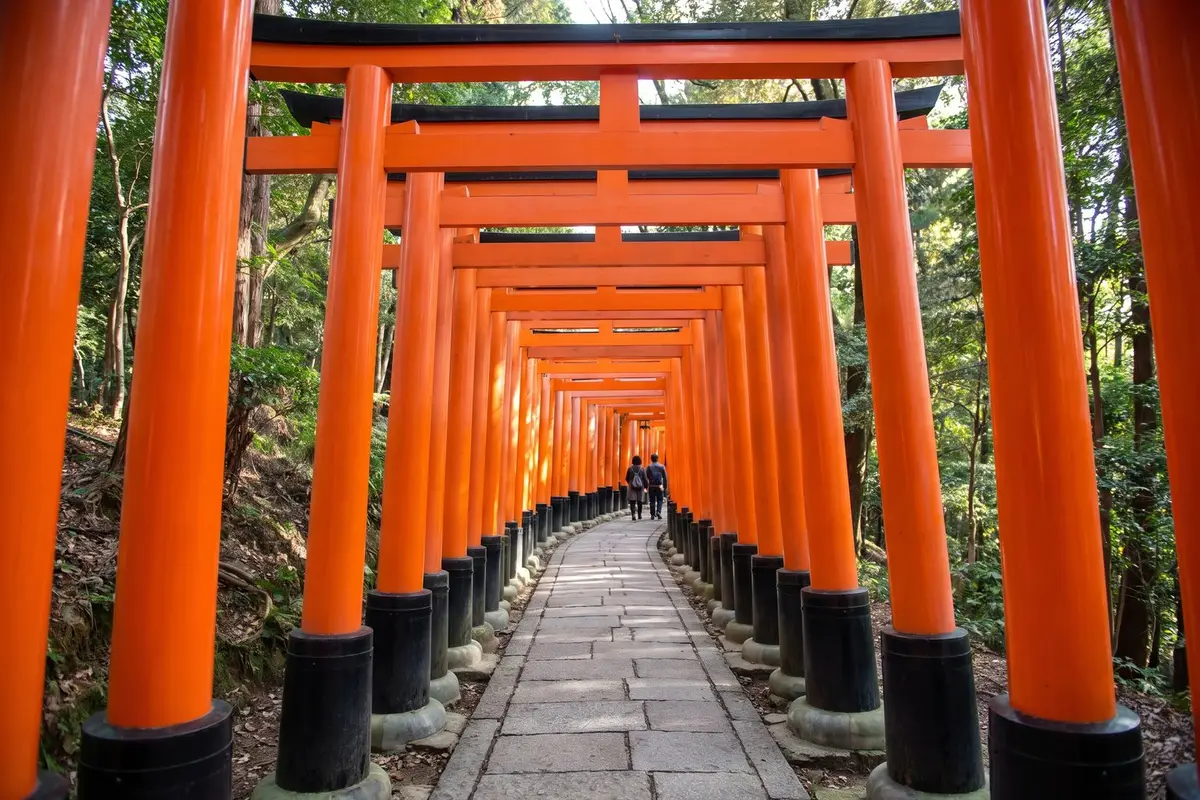
Fushimi Inari Taisha, famous for its tunnels of vermilion torii, the head shrine of Inari shrines across Japan. The fox messengers, the Senbon Torii, the Omokaru Stone, Yotsutsuji and the summit of Mount Inari. An audio guide in ten chapters.
- 122 audio guides across Japan — Tokyo, Kyoto & Osaka
- Made for walking — it tells you where to stand and what to look at
- 3 days (Kyoto + food) ¥2,000 · 1 month (all cities) ¥3,000or this guide only ¥700 (7 days)
- 1Welcome to Fushimi Inari TaishaFree
- 2The Romon Gate — Where the Name Inari Began
- 3The Main Sanctuary — Five Deities, and a Shrine Reborn from Fire
- 4The Foxes — Messengers Holding Keys
- 5The Senbon Torii — Secrets of the Vermilion Tunnel
- 6The Okusha Hohaisho — Make a Wish on the Omokaru Stone
- 7Shin-ike Pond and Kumataka-sha — Clap Your Hands, and an Echo Returns
- 8Yotsutsuji — Looking Down on Kyoto
- 9Ichinomine — Where the Mountain Gods Began
- 10Coming Down the Mountain — The Answer of the Torii and the Foxes
All chapters of this guide · 7 days — ¥700
Welcome to Fushimi Inari Taisha
Transcript
Welcome to Fushimi Inari Taisha. At the foot of Mount Inari, in southern Kyoto, stands Fushimi Inari Taisha, the head shrine of about thirty thousand Inari shrines across Japan. Its endless lines of vermilion torii gates winding up the mountain paths draw travelers from all over Japan and the world. The whole mountain is sacred, and there are about ten thousand torii gates. Let me give you a small taste of what lies ahead. In front of the Romon Gate, two fox statues face each other, each holding something in its mouth. What are they holding, and why foxes? You'll find out in the fourth chapter. Once you step into the tunnel of vermilion gates, be sure to peek at the back of the torii. The people who built them left a certain trace there. Beyond the tunnel, at the Okusha Hohaisho, there is a mysterious stone that tells the weight of your wish. And halfway up the mountain, at Yotsutsuji, the city of Kyoto suddenly opens up before your eyes. Here is a question to carry with you. Why did Inari shrines spread so widely across Japan, and why did this mountain fill up with vermilion torii gates? The answer will come into view little by little as you walk. We'll return to this question in the last chapter. This guide has ten chapters: from the Romon Gate through the Senbon Torii, the Okusha Hohaisho and Yotsutsuji, up to Ichinomine, the summit of Mount Inari. There is one chapter for each place. When you arrive, play the next chapter. If you're short on time, turning back at the Okusha Hohaisho or at Yotsutsuji is still well worth it. The mountain path has many stone steps that get slippery in the rain. It's best to finish your walk while it's still light. Now, make your way to the Romon Gate. From Japan Railways (JR) Inari Station, pass under the great vermilion torii; it's about a three-minute walk. When you arrive in front of the Romon Gate, play the next chapter.
Explore the city. Taste Japan. Hear the Story.
GuideTunes brings Kyoto's temples, shrines, gardens and old streets together in one audio guide app. Put in your earphones and hear the history and stories behind each place as you walk. The first chapter of every guide is free.