Language English
Kiyomizu-dera Temple Audio Guide
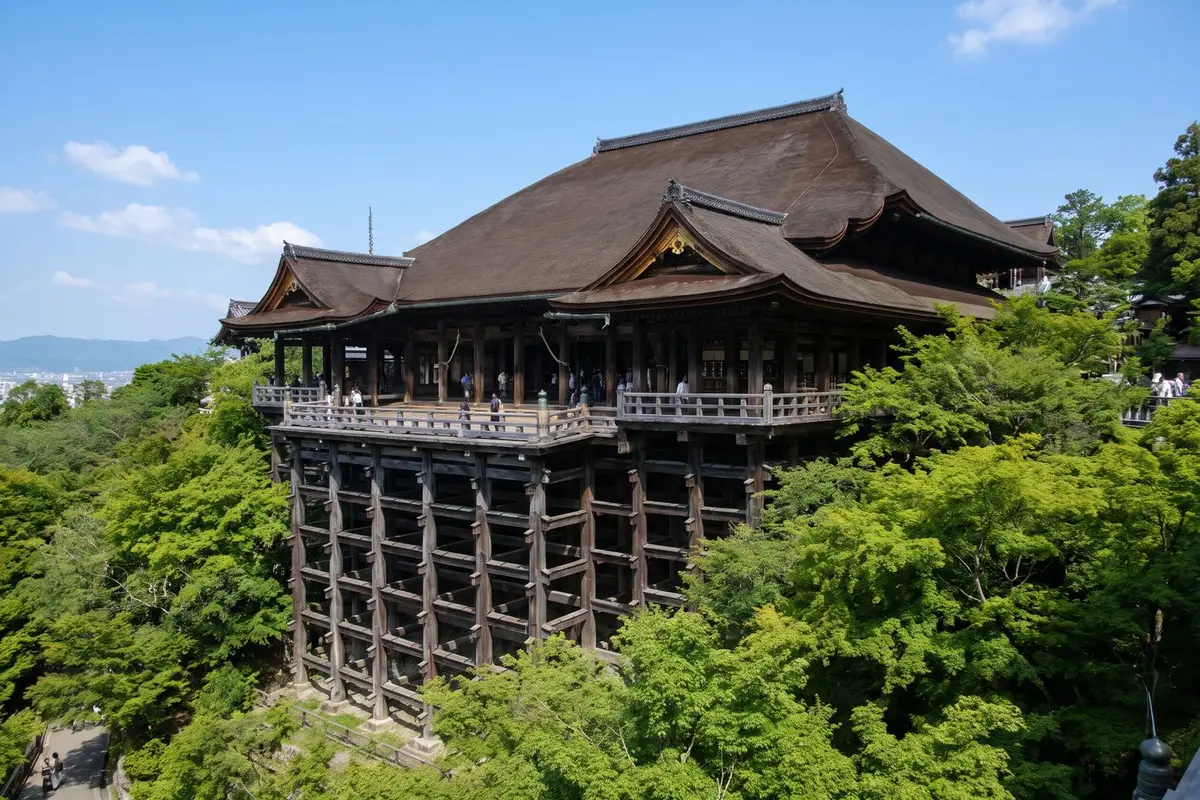
Kiyomizu-dera, famous for its wooden stage on the cliff. Walk the route from the Nio Gate to the Three-Story Pagoda, the Main Hall and its stage, the Okunoin and the Otowa Waterfall, and follow a 1,200-year story. An audio guide in ten chapters.
- 122 audio guides across Japan — Tokyo, Kyoto & Osaka
- Made for walking — it tells you where to stand and what to look at
- 3 days (Kyoto + food) ¥2,000 · 1 month (all cities) ¥3,000or this guide only ¥700 (7 days)
- 1Welcome to Kiyomizu-deraFree
- 2The Nio Gate — How Kiyomizu Got Its Name
- 3The West Gate and Bell Tower — Sunset Prayers and a History of Rebuilding
- 4The Three-Story Pagoda — The Symbol of Kiyomizu Against the Kyoto Sky
- 5Zuigu-do and the Sutra Hall — Wishes and Learning
- 6The Main Hall — A Hall of Prayer on a Cliff
- 7The Stage of Kiyomizu — A Place of Offering and Courage
- 8The Okunoin and Amida Hall — The Best View of the Stage, and the Birth of Nenbutsu
- 9The Otowa Waterfall — The Ever-Flowing Origin of the Temple's Name
- 10The Thousand Stone Buddhas and Jojuin — Prayers Passed Down
All chapters of this guide · 7 days — ¥700
Welcome to Kiyomizu-dera
Transcript
Welcome to Kiyomizu-dera. In the east of Kyoto, halfway up Mount Otowa, vermilion halls and pagodas stand on a cliff, as if floating in the sky. The story begins in the year 778. For more than twelve hundred years since, this has been a sacred place of Kannon, the bodhisattva of compassion, loved by people of every rank and walk of life. In 1994, it was inscribed as a World Heritage Site. But the real fascination of this temple does not show itself at first glance. Take the famous Stage of Kiyomizu. It rises about thirteen meters high, and it rests on just eighteen pillars of zelkova wood. And not a single nail holds it together. How has it stood for almost four hundred years? When you stand on the stage, I'll tell you what is happening beneath your feet. Under one of the halls, there is a mysterious place where you walk in total darkness, feeling your way along. And at the end of the journey, you will stand before a single stream of water, the very water where this temple began. It has flowed, never drying up, for more than twelve hundred years. Here is a question to carry with you. This temple has burned down many times. And every time, people rebuilt it. Why have people protected this temple on a cliff for more than a thousand years? The answer lies hidden in the temple's name. By the last chapter, it will all make sense. This guide has ten chapters: from the Nio Gate to the West Gate and bell tower, the Three-Story Pagoda, the Zuigu-do Hall, the Main Hall and its famous stage, the Okunoin, the Otowa Waterfall, and finally the way out. There is one chapter for each place. When you arrive, play the next chapter. The narration runs about forty minutes in all. With stops along the way, allow about an hour. Smoking is not allowed in the temple grounds, and please don't eat while you walk. There are many steps and slopes, so wear comfortable shoes and take your time. Now, make your way to the entrance of Kiyomizu-dera, the great vermilion gate called the Nio Gate. When you're standing beneath it, play the next chapter.
Explore the city. Taste Japan. Hear the Story.
GuideTunes brings Kyoto's temples, shrines, gardens and old streets together in one audio guide app. Put in your earphones and hear the history and stories behind each place as you walk. The first chapter of every guide is free.