Language English
Nanzen-ji and the Suirokaku Aqueduct Audio Guide
Nanzen-ji, a Zen temple of special rank, where Zen stillness meets the Meiji dream of modernization. The "What a view!" gate, the Garden of Leaping Tiger Cubs, the brick aqueduct in the forest, and the imperial villa where it began. An audio guide in seven chapters.
- 122 audio guides across Japan — Tokyo, Kyoto & Osaka
- Made for walking — it tells you where to stand and what to look at
- 3 days (Kyoto + food) ¥2,000 · 1 month (all cities) ¥3,000or this guide only ¥700 (7 days)
- 1Welcome to Nanzen-ji and the Suirokaku AqueductFree
- 2The Sanmon Gate: "What a View!"
- 3The Dharma Hall: The Ceiling Dragon and the Temple Above the Five Mountains
- 4The Abbot's Quarters and the Garden of Leaping Tiger Cubs
- 5The Sliding-Door Paintings: The Drinking Tiger
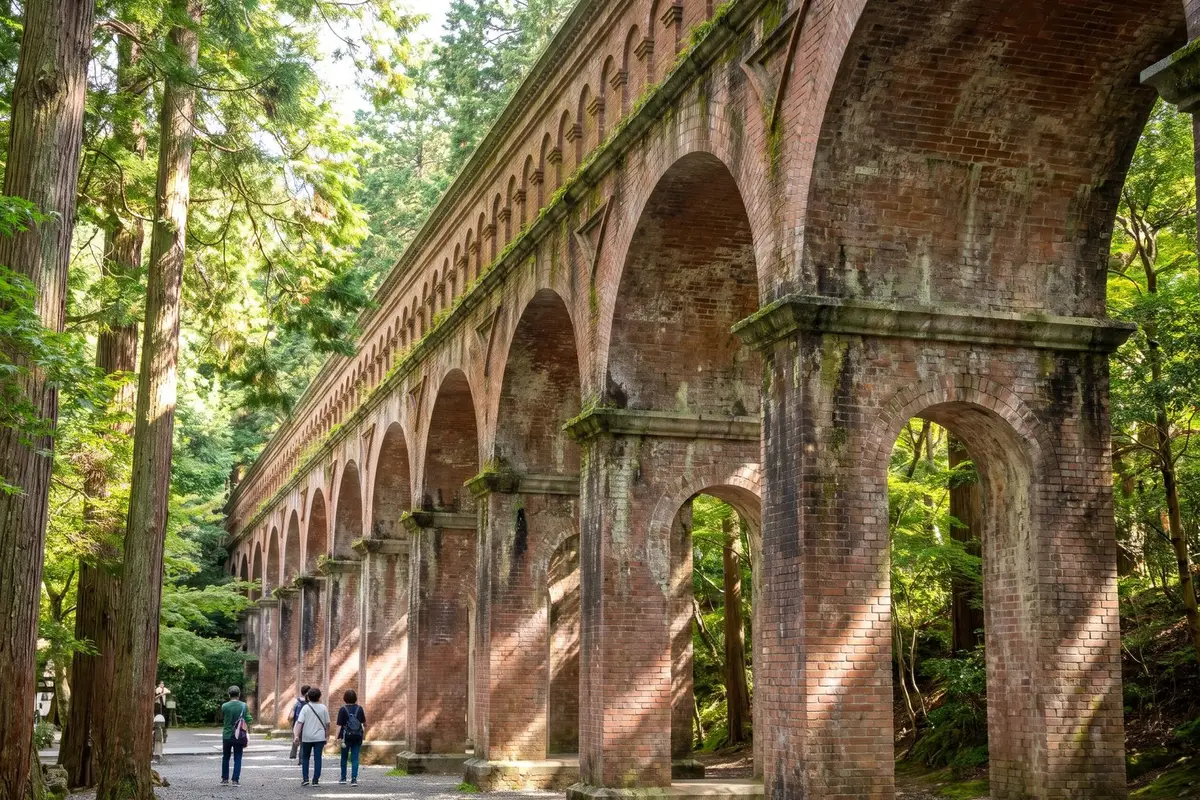
- 6The Suirokaku: A Brick Bridge in a Zen Temple's Forest
- 7Nanzen-in: The Zen Monk Who Calmed the Spirits
All chapters of this guide · 7 days — ¥700
Welcome to Nanzen-ji and the Suirokaku Aqueduct
Transcript
Welcome to Nanzen-ji. In the east of Kyoto, at the foot of the Higashiyama hills, a towering wooden gate rises beyond a grove of pines. Behind it lie spacious grounds and a white sand garden. And in the forest, for some reason, stands a Western-style aqueduct with a row of brick arches. Nanzen-ji is a temple where the stillness of Zen and the Meiji-era dream of modernization meet in one place. In autumn, the whole temple turns red with maples, making it one of Kyoto's finest spots for fall colors. On this walk, you'll climb the gate where a legendary kabuki thief struck a pose and cried "What a view!", gaze at a garden named for a tiger mother carrying her cubs across a river, and walk beneath brick arches in the forest. Before we begin, here is a question to carry with you. Nanzen-ji has long been regarded as the highest-ranking of all Japan's Zen temples. But it wasn't a temple to begin with. What was it originally? And why did it become a Zen temple? You'll hear the answer in the final chapter. This guide has seven chapters: from the Imperial Messenger Gate to the main gate, the Dharma Hall, the abbot's quarters with their garden and painted sliding doors, the Suirokaku aqueduct, and Nanzen-in. When you reach each spot, play the next chapter. The narration runs about twenty-two minutes in all. You can walk the grounds freely, but going up the main gate or into the abbot's quarters requires an admission ticket. People come here to pray, so please walk quietly. Now, head to the Imperial Messenger Gate on the west side of the grounds. When you get there, play the next chapter.
Explore the city. Taste Japan. Hear the Story.
GuideTunes brings Kyoto's temples, shrines, gardens and old streets together in one audio guide app. Put in your earphones and hear the history and stories behind each place as you walk. The first chapter of every guide is free.